

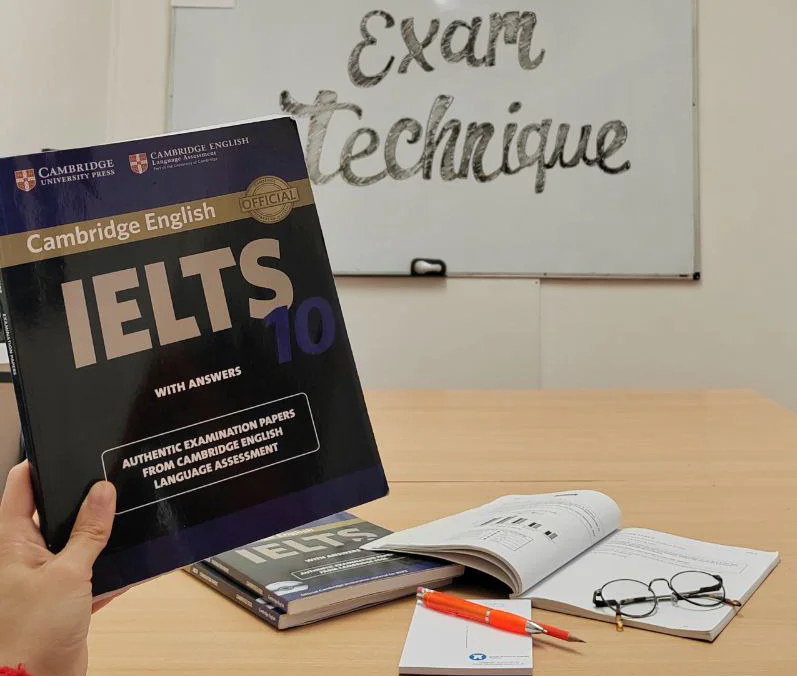

English IELTS preparation Exams. Knowing English well and passing the IELTS exam with a high band score are two different things. Many fluent speakers in Uganda are surprised when their results come back lower than expected, simply because they did not practice under real exam conditions. That is where IELTS preparation exams come in. Practice tests and full mock exams show you exactly how the English IELTS exam feels, reveal your weak points, and train you to manage time under pressure.
In this guide, the trainers at Learn English Uganda explain how IELTS preparation exams work, how to use them properly, what each section looks like with original sample questions, how to calculate your band score, and how to build a mock exam routine that steadily pushes your score upward. Whether you are aiming for university abroad, work registration or migration, this is your roadmap to walking into the test centre fully prepared.
What Are IELTS Preparation Exams?
IELTS preparation exams are practice versions of the real International English Language Testing System test. They copy the format, timing, question types and difficulty of the official exam, so you can rehearse before the day that matters. They come in three main forms:
- Section practice tests: short tests that focus on one skill, such as a single Listening part or one Reading passage. These are ideal for daily practice.
- Full practice tests: all four sections completed in one sitting, just like the real exam, but usually marked by yourself or a study partner.
- Mock exams: complete tests taken under strict exam conditions at a training centre, with Writing and Speaking assessed by an experienced trainer using the official band descriptors.
Each type plays a different role. Section tests build skills, full tests build stamina, and mock exams give you a reliable estimate of your real band score. The strongest candidates use all three at different stages of their preparation.
Why Practice Exams Are the Secret to a High IELTS Band Score
IELTS rewards candidates who are familiar with the test. Practice exams help in several important ways:
- They remove surprises. You learn the instructions, answer sheet layout and question styles in advance, so you waste no time on test day working out what to do.
- They train your timing. The Reading section gives you 60 minutes for 40 questions, and Writing gives you 60 minutes for two tasks. Only timed practice teaches you to finish on time.
- They expose your weaknesses. A practice exam quickly shows whether you struggle with map labelling in Listening, True/False/Not Given in Reading, or developing ideas in Writing Task 2.
- They build confidence. Every completed test reduces exam anxiety and makes the real test feel familiar.
- They track progress. Regular scores show you whether your study methods are working and when you are ready to book the real exam.
If your general English still needs strengthening before you start exam practice, take a look at our English language courses, which build the grammar, vocabulary and fluency that practice exams will later test.
Understanding the English IELTS Exam Structure
Before you take your first practice exam, make sure you know what you are practising for. The IELTS test has four sections. Listening, Reading and Writing are completed on the same day, one after the other, without breaks. Speaking may take place on the same day or within a few days before or after.
- Listening: about 30 minutes, 4 parts, 40 questions.
- Reading: 60 minutes, 3 passages, 40 questions.
- Writing: 60 minutes, 2 tasks (150 words and 250 words minimum).
- Speaking: 11 to 14 minutes, 3 parts, face to face with an examiner.
There are two versions of the test. IELTS Academic is for university admission and some professional registrations, while IELTS General Training is mostly for migration and work. Listening and Speaking are the same in both, but Reading and Writing differ, so always practise with materials that match the version you will sit. The exam is offered both on paper and on computer in Kampala, and you should practise in the same format you plan to take.
IELTS Listening Practice Test: What to Expect
The Listening exam contains four recordings of increasing difficulty. Part 1 is a conversation in an everyday situation, Part 2 is a monologue about a social topic, Part 3 is an academic discussion between up to four speakers, and Part 4 is a university-style lecture. You hear each recording only once.
Sample question (form completion, Part 1 style): You hear a caller booking a room at a guesthouse in Entebbe.
- Name of guest: Sarah ____________
- Number of nights: ____________
- Preferred room type: ____________
Instructions: Write NO MORE THAN TWO WORDS AND/OR A NUMBER for each answer.
Questions like this test your ability to catch names, numbers and spellings. Examiners often include a speaker who changes their mind (“three nights… actually, make it four”), so you must wait for the final answer.
How to use Listening practice tests: Complete one full Listening test every week under timed conditions. Afterwards, replay the recording with the transcript and find exactly where each answer was given. This habit trains your ear to recognise paraphrasing and distractors far faster than simply listening more. Daily conversation practice in our spoken English classes in Uganda also improves how quickly you understand different speakers.
IELTS Reading Practice Test: Question Types and Sample
The Reading exam includes around 14 different question types. The most common are multiple choice, True/False/Not Given (or Yes/No/Not Given), matching headings, matching information, sentence completion, summary completion and short-answer questions.
Sample passage extract: “Lake Victoria supports the livelihoods of millions of people across Uganda, Kenya and Tanzania. In recent decades, however, the spread of water hyacinth has disrupted fishing and transport. Mechanical removal has reduced the problem in some areas, although biological control using weevils has proved more cost-effective over the long term.”
Sample questions (True / False / Not Given):
- 1. Lake Victoria is shared by three countries.
- 2. Water hyacinth has improved fishing on the lake.
- 3. Weevils were first introduced to the lake by Ugandan scientists.
Answers: 1. True (the passage names three countries). 2. False (it says fishing was disrupted). 3. Not Given (the passage does not say who introduced the weevils).
This example shows the most common trap: candidates choose “False” when the correct answer is “Not Given”. Remember, “False” means the text contradicts the statement, while “Not Given” means the text simply does not say.
How to use Reading practice tests: Begin by practising one passage at a time with a 20-minute limit. Once you can complete a passage accurately in 20 minutes, move to full 60-minute tests. Review every wrong answer and note the question type. If your reading speed is low, extra reading outside the exam, combined with our tips on how to learn English faster, will help significantly.
IELTS Writing Practice Test: Task 1 and Task 2 Samples
The Writing exam is where most candidates lose marks, so it deserves the most practice. Examiners score four criteria: Task Achievement or Task Response, Coherence and Cohesion, Lexical Resource, and Grammatical Range and Accuracy.
Academic Writing Task 1 sample: The bar chart below shows the number of international tourists visiting four East African countries in 2015 and 2025. Summarise the information by selecting and reporting the main features, and make comparisons where relevant. Write at least 150 words.
A strong answer includes an introduction that paraphrases the question, a clear overview of the main trends (for example, which country grew fastest), and two body paragraphs that compare the key figures. You should spend about 20 minutes on this task.
General Training Writing Task 1 sample: You recently attended a training course in Kampala, but some of the facilities were not satisfactory. Write a letter to the course organiser. In your letter, describe the course, explain what problems you experienced, and say what you would like the organiser to do.
Writing Task 2 sample: Some people believe that young people should be encouraged to work in their home country after completing university, while others think they should gain experience abroad. Discuss both views and give your own opinion. Write at least 250 words.
For Task 2, spend around 40 minutes: five minutes planning, thirty minutes writing four paragraphs (introduction, two body paragraphs and conclusion), and five minutes checking. Always answer every part of the question; in this example, you must discuss both views and give your opinion.
How to use Writing practice tests: Write two to three timed responses each week and have them marked by a qualified trainer. Self-marking Writing is unreliable because it is hard to spot your own errors. Our trainers mark practice essays against the official descriptors and give specific advice you can apply straight away, as part of our English courses in Kampala.
IELTS Speaking Practice Test: Sample Questions for All Three Parts
The Speaking exam is a recorded conversation with a certified examiner. It is scored on Fluency and Coherence, Lexical Resource, Grammatical Range and Accuracy, and Pronunciation.
Part 1 (4–5 minutes) sample questions:
- Where is your hometown, and what do you like about it?
- Do you prefer studying in the morning or in the evening? Why?
- How often do you use public transport?
Part 2 (3–4 minutes) sample cue card:
Describe a place in Uganda you would recommend to a visitor. You should say: where it is, how you know about it, what visitors can do there, and explain why you would recommend it.
You get one minute to prepare notes and then speak for up to two minutes without interruption.
Part 3 (4–5 minutes) sample discussion questions:
- How has tourism changed in your country over the past twenty years?
- What are the advantages and disadvantages of tourism for local communities?
- Should governments limit the number of tourists visiting natural sites?
How to use Speaking practice tests: Practise with a partner or trainer who can play the examiner. Record every practice session and listen back for long pauses, repeated words and grammar mistakes. Aim to extend every answer with reasons and examples. Our Spoken English Course gives you regular speaking practice with trained teachers, which is the fastest way to raise your Speaking band.
How to Calculate Your IELTS Band Score From a Practice Test
After a practice exam, you will want to know what band your performance represents. Listening and Reading are marked out of 40, and the raw score is converted into a band. The exact conversion varies slightly from test to test, but the approximate guide below is widely used for Listening and Academic Reading:
- 39–40 correct: Band 9
- 35–36 correct: around Band 8
- 30–31 correct: around Band 7
- 23–25 correct: around Band 6
- 16–17 correct: around Band 5
General Training Reading uses a stricter scale, so you need more correct answers for the same band. Writing and Speaking are assessed against the public band descriptors, which is why a trained assessor is important for reliable scores in these two skills.
Your overall band is the average of your four section scores, rounded to the nearest half band. For example, scores of 7.0, 6.5, 6.0 and 6.5 average 6.5, giving an overall Band 6.5. Knowing this helps you plan: a strong Listening score can balance a weaker Writing score, but many universities and regulators also set a minimum for each skill.
How to Take a Mock Exam Like the Real IELTS Test
A mock exam is only useful if it feels like the real thing. Follow these rules every time:
- Take all sections in order: Listening, Reading and Writing back to back, with no breaks, just like test day.
- Use strict timing. Set a timer and stop writing the moment time is up.
- Remove distractions. Switch off your phone, work at a clear desk and do not use a dictionary or notes.
- Use a pencil and answer sheet for paper practice, or a computer-based simulation if you are taking computer-delivered IELTS.
- Start at the same time as your real test, often in the morning, so your brain gets used to performing at that hour.
- Include a Speaking test with a trainer or partner, recorded for review.
Taking mock exams at a training centre adds realism because you sit alongside other candidates, follow an invigilator’s instructions and receive professional feedback. Many of the best English training centers in Kampala offer this service as part of their exam preparation programmes.
Reviewing Your Practice Exams: Where the Real Progress Happens
Taking tests without reviewing them is one of the biggest mistakes candidates make. The review is where you learn. After each practice exam:
- Mark your Listening and Reading answers, then find the exact place in the transcript or passage that proves each correct answer.
- Record every mistake in an error log, noting the question type and the reason (vocabulary, misreading, spelling, timing or distraction).
- Compare your Writing with model answers and your trainer’s feedback, and rewrite your weakest paragraph.
- Listen to your Speaking recording and write down three specific things to improve next time.
After four or five tests, your error log will reveal clear patterns. Focus your study on those patterns, and your score will climb much faster than if you simply take more tests.
Recommended Practice Exam Schedule Before Test Day
How often should you take IELTS preparation exams? Here is a practical eight-week schedule that works for most learners:
- Week 1: One full diagnostic test to find your starting band.
- Weeks 2–4: Daily section practice (one Listening part or one Reading passage), plus two Writing tasks and three Speaking sessions per week.
- Weeks 5–6: One full practice test each week, plus continued section practice on weak question types.
- Weeks 7–8: Two full mock exams per week under strict conditions, with detailed review after each.
Stop taking full mock exams two or three days before your real test. Use the final days for light revision, vocabulary review and rest. If you are unsure how long your overall preparation should be, our guide on how long it takes to learn English offers a helpful timeline.
Where to Find Reliable IELTS Practice Tests
Not all practice materials are equal. Poorly written tests can be too easy or too hard and give you a false picture of your level. Use these trusted sources:
- Official Cambridge IELTS practice books, which contain authentic past papers with answer keys and audio.
- Free sample tests from the official IELTS test providers, including computer-based practice that shows you the real interface.
- Mock exams from a reputable training centre, where Writing and Speaking are marked by experienced trainers.
If you are studying from home or around a busy work schedule, online practice is a practical option. Read our article on studying English language online, and see KCI Institute’s view on whether you can study English online for more ideas.
Common Mistakes Candidates Make in IELTS Preparation Exams
- Taking tests without timing them. Untimed practice gives a falsely high score and does not build exam speed.
- Only practising favourite sections. Many candidates keep practising Listening because it feels easy, while avoiding Writing, which needs the most work.
- Skipping the review. Scores improve through understanding mistakes, not through the number of tests completed.
- Memorising model answers. Examiners recognise memorised language and lower scores for it.
- Marking your own Writing and Speaking too generously. Get an objective assessment from a trainer.
- Ignoring spelling and word limits. In Listening and Reading, a correct answer with a spelling mistake or too many words scores zero.
Preparing for the Exam as a Beginner or Working Adult
If your English is at a basic level, jumping straight into full IELTS practice exams can be discouraging. Start by building a strong foundation with our English language course for beginners in Uganda or our friendly English classes for beginners in Kampala. Once your grammar and vocabulary improve, practice exams become far more productive.
Working adults can fit exam preparation into busy lives by doing short section tests on weekday evenings and full mock exams at the weekend. Our list of trusted English training schools for adults in Uganda highlights flexible options, and KCI Institute’s guide to English learning schools for adults in Uganda is another useful read. International learners living in Uganda can also benefit from our English for Foreigners in Uganda programme before moving into exam training.
Choosing an IELTS Preparation Centre in Uganda
Practice exams are most effective when combined with expert teaching. When choosing a centre, look for qualified trainers who know the band descriptors, regular mock exams with feedback, small classes, flexible schedules and clear fees. Our comparison of the best English language schools in Uganda and our review of the best language centers in Kampala can help you decide. KCI Institute also offers an overview of English learning centers in Uganda, and you can explore their structured English, French and German language courses.
Budget matters too. Before you enrol, check our honest guide to how much an English course costs in Uganda so you can plan your investment wisely.
Frequently Asked Questions About IELTS Preparation Exams
How many IELTS practice tests should I take before the real exam?
Most successful candidates complete between six and ten full practice tests, plus regular section practice. Quality matters more than quantity, so review every test carefully.
Are IELTS practice test scores accurate?
Listening and Reading scores from official materials are a good guide. Writing and Speaking scores are only reliable when marked by a trained assessor using the official band descriptors.
Is the real IELTS exam harder than practice tests?
Official practice tests are designed to match the real exam’s difficulty. Many candidates find the real test feels harder because of nerves, which is why mock exams under strict conditions are so valuable.
Can I take IELTS mock exams in Kampala?
Yes. Learn English Uganda runs exam preparation classes that include timed practice tests and trainer feedback. Check our upcoming intakes for start dates.
When should I book my real IELTS test?
Book your test when your mock exam scores consistently meet or exceed your target band in every section.
Start Practising for Your IELTS Exam Today
IELTS preparation exams turn knowledge into results. By practising each section, sitting regular mock exams under real conditions, reviewing every mistake and getting expert feedback on your Writing and Speaking, you give yourself the best possible chance of achieving your target band the first time.
Ready to begin? Learn more about Learn English Uganda, read more exam and study tips on our blog, or apply now to join our next class.
You can also explore further study options with our partners at KCI Institute: browse their UVTAB courses, read about the institute, check the admission requirements, apply online, or access the student portal. Your target band score is closer than you think, so start practising today.