

English Courses in Kampala. Kampala is East Africa’s fastest-growing hub for business, diplomacy, tourism and higher education, and that growth has created one very practical need: strong, confident English. Whether you are a Ugandan school-leaver preparing for university, a refugee or migrant settling into city life, a professional chasing a promotion, or a foreign national relocating for work with an NGO or embassy, finding the right English courses in Kampala can shape how quickly you settle in and how far your career goes. This guide walks through everything you need to know before you enrol — the levels, the pricing, the timelines, and how to tell a genuinely good English language school in Kampala from one that just looks good online.
At Learn English Uganda, we built our programme around exactly these questions, because they are the ones our own students ask us every week. If you want the short version, you can jump straight to our courses page or apply now. If you want the full picture first, read on.
Why Demand for English Courses in Kampala Keeps Rising
Uganda’s official working language is English, but for most residents it is a second, third, or even fourth language learned alongside Luganda, Runyankole, Acholi, Kiswahili or another mother tongue. As Kampala’s economy has diversified — more international NGOs along Kololo and Nakasero, more tech and outsourcing firms in Ntinda and Bugolobi, more tourism traffic heading through Entebbe — employers increasingly expect job applicants to write reports, answer calls, and hold meetings in clear, professional English. Add to that the steady flow of refugees and economic migrants from the wider East African Community who arrive with little or no English, and it’s easy to see why structured English courses in Kampala have become one of the most searched-for services in the city.
Who Actually Enrols in English Classes in Uganda
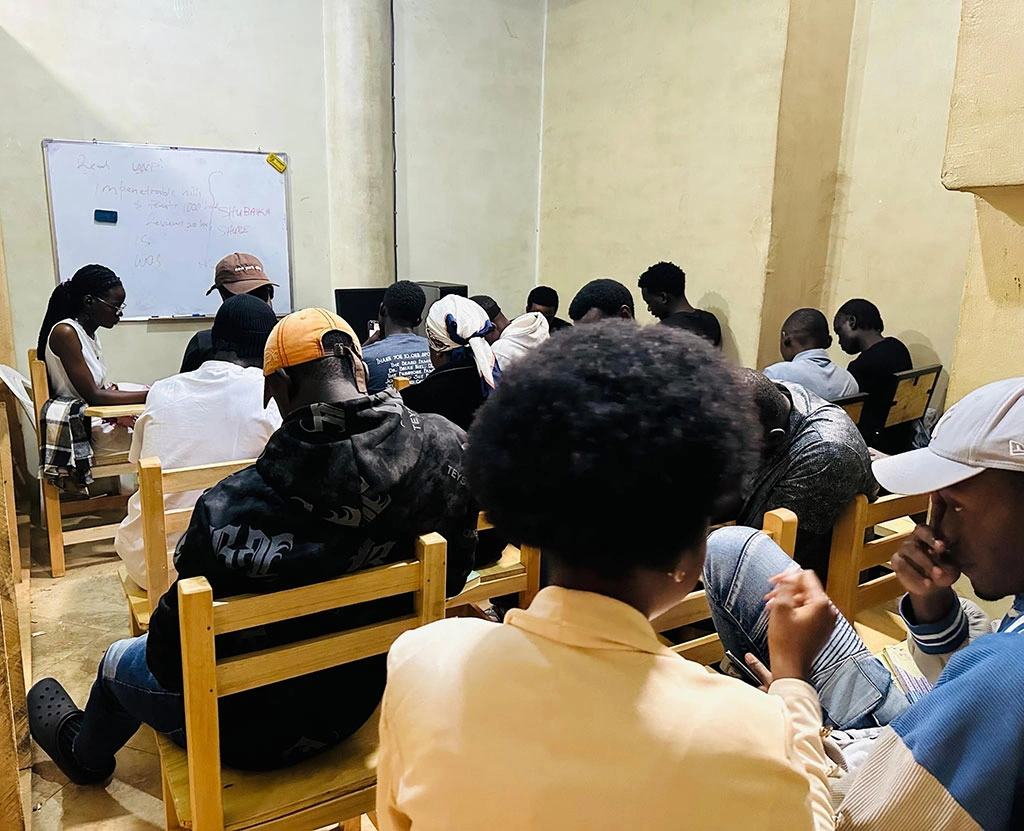
It’s a wider mix than most people expect. Our classrooms typically include university-bound secondary school graduates strengthening their grammar and essay writing, working adults who need to sound polished in interviews and emails, refugees and asylum seekers building everyday survival English, and foreign nationals — often French, Chinese, Korean or Congolese nationals living in Kampala — who need English for daily life and business. Many students first search for something general like “learn English in Uganda” and only later discover that the right course depends heavily on their starting point, which is exactly what a proper placement assessment is for. You can read more about who typically enrols and why in our article on who can study English language in Uganda.
The Three-Level Structure Most Kampala English Schools Use
Most established language centres in Kampala, including ours, structure English instruction into three progressive levels — Beginner, Intermediate and Advanced — with each level typically lasting around three months. This mirrors the approach used by other respected institutions in the city, such as Kenlink Institute’s language courses and Uganda Language School’s course catalogue, both of which run comparable level-by-level programmes. The logic is simple: language skills build in layers, and rushing a beginner into advanced business English almost always backfires.
Level 1: Beginner English — Building Your Foundation
Beginner English focuses on the essentials: everyday vocabulary, basic sentence structure, greetings, numbers, telling time, and enough listening comprehension to follow simple conversations. This level is designed for absolute beginners and for students whose English was never formally taught. It typically runs for three months and lays the groundwork everything else depends on. Many of our beginner students come in after reading our piece on the best English schools in Uganda and comparing a handful of institutions before choosing where to start.
Level 2: Intermediate English — Strengthening Fluency
Intermediate English is where confidence starts to show. Students move into more complex grammar (past, present and future tenses used naturally together), broader vocabulary for work and social situations, and guided speaking practice designed to reduce hesitation. This is also the stage where written English — emails, short reports, structured paragraphs — becomes a bigger focus, since it’s the skill most Kampala employers actually test for in interviews.
Level 3: Advanced English — Mastering Professional Communication
Advanced English targets fluency that holds up in demanding, real-world settings: public speaking, negotiation, academic writing, and workplace communication at a managerial level. Graduates of this level are typically ready for university study taught in English, customer-facing roles, or leadership positions where clear communication is non-negotiable. If you’re unsure which level fits you, our course details page explains the full curriculum for each stage.
How Much Does an English Course Cost in Kampala?
Pricing varies by institution, but there is now enough consistency in the market to give a reliable benchmark. A single three-month level of English typically costs around UGX 500,000 at established centres, with a full three-level programme (nine months total) coming in near UGX 1,500,000 when paid upfront — a structure you’ll also find reflected at Kenlink Institute. On top of tuition, most schools charge a modest one-time admission fee, generally in the range of UGX 50,000 for East African citizens or roughly USD 40 for foreign nationals, plus identification documents and a passport photo. We break this down level by level, with no hidden extras, in our detailed post on how much an English course costs in Uganda.
How Long Does It Take to Learn English in Uganda?
For most learners starting from a low base, the realistic timeline to reach solid working fluency is around nine months to a year, moving through all three levels with regular attendance. Learners who already have some school-level English can sometimes skip ahead after a placement test and finish sooner. Progress also depends heavily on practice outside the classroom — reading, listening to English media, and speaking with classmates rather than only during lesson hours. We go deeper into realistic expectations, including what slows learners down, in how long it takes to learn English.
Online vs In-Person English Classes in Kampala
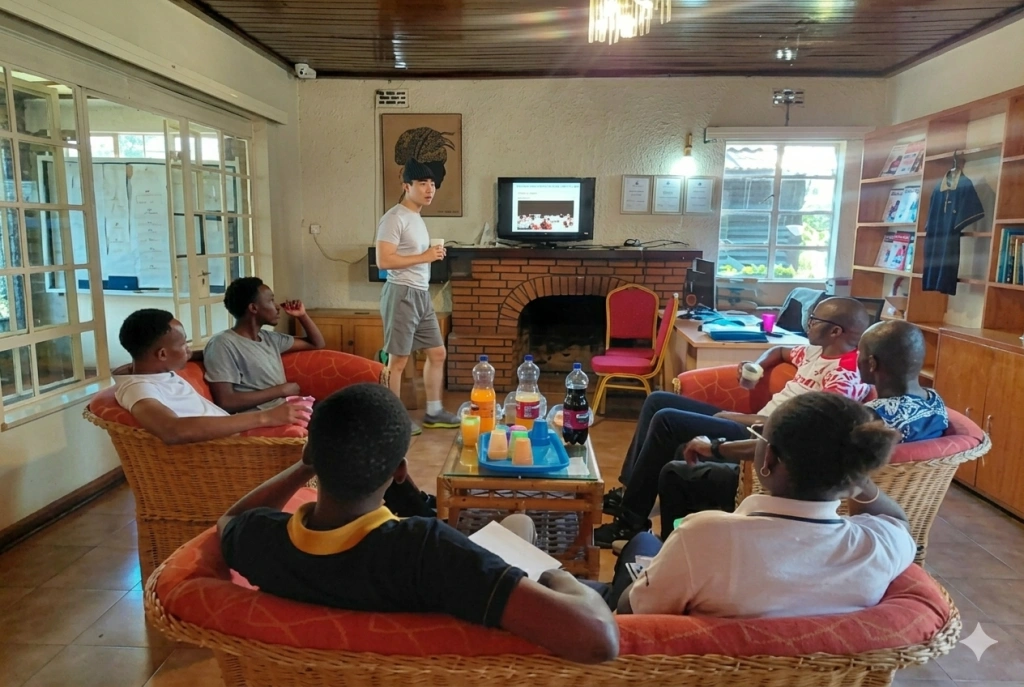
Both formats have a real place. In-person classes suit learners who want structured accountability, face-to-face correction, and a classroom community — useful for beginners especially. Online classes suit working professionals, students outside Kampala, or anyone juggling a tight schedule, and they’ve become far more common since schools across the city, including Uganda Language School’s online English lessons, invested in proper virtual classrooms rather than treating online delivery as an afterthought. At Learn English Uganda we offer both physical and online classes across all three levels, so the choice comes down to your schedule and learning style rather than what’s simply available.
What to Look for in the Best English Language School in Kampala
Not every centre advertising “English classes” delivers a structured curriculum. Before enrolling anywhere, check for a clear level system with placement testing, qualified and experienced tutors (not just fluent speakers), a transparent fee structure with a published refund policy, manageable class sizes, and genuine student outcomes rather than stock-photo marketing. It’s worth comparing a shortlist directly — our roundup of the best language centres in Kampala and the wider look at the best English teaching schools in Uganda are good starting points, alongside independent comparisons like Uganda Language School’s list of language schools in Kampala city.
Admission Requirements for English Courses in Kampala
Enrolment at most reputable centres is straightforward. You’ll generally need a valid national ID or passport, one recent passport-size photograph, and payment of the one-time admission fee mentioned earlier. Some schools also run a short placement conversation or written test so tutors can place you at the right level from day one rather than guessing. You can see our exact requirements and start the process directly on our apply now page, or read more about the institution behind the programme on our about us page.
Beyond English: Other Languages Worth Considering in Kampala
English is the priority for most learners, but Kampala’s growing international community has also fuelled demand for other languages. If you already speak strong English and want a second professional language, schools such as Uganda Language School’s French language programme and Kenlink Institute’s language courses (which also cover French and German) run on a similar level-based structure, so the study habits you build in English transfer directly.
Pairing English with Vocational or Professional Training
A growing number of our students treat English as step one, not the whole plan. Once conversational and written English reach a working level, many go on to vocational or professional training where instruction is delivered in English — from Kenlink Institute’s UVTAB-certified courses to business and hospitality programmes elsewhere in the city. Strong English first makes every course that follows easier to pass.
Practical Tips to Learn English Faster in Kampala
Class time alone rarely produces fluency — what you do between lessons matters just as much. Read Ugandan newspapers in English for ten minutes a day, watch English-language news or shows with subtitles, keep a small vocabulary notebook for new words you hear around town, and speak English deliberately with classmates rather than switching back to your first language the moment class ends. Students who combine structured lessons with daily practice consistently finish each level faster than those relying on classroom hours alone.
Why Choose Learn English Uganda for Your English Course
We built our three-level programme specifically around Kampala’s real learner base: working adults, students, refugees and international residents who need results, not just certificates. Every level runs for three months with experienced tutors, small class sizes, and both physical and online options, and our transparent pricing and refund policy mean there are no surprises once you’ve enrolled. Unlike centres that squeeze dozens of students into one room, we keep classes small enough that tutors can correct pronunciation and writing individually, which is usually the difference between a certificate that looks good on paper and English you can actually use in a job interview or a university seminar. You can browse everything on our courses page, read student stories on our blog, or go ahead and apply now to secure your place in the next intake.
Frequently Asked Questions About English Courses in Kampala
Do I need any prior English knowledge to enrol?
No. Our Beginner level is designed for absolute beginners, and a short placement conversation ensures you start at the right level.
How much does a full English course cost in Uganda?
Roughly UGX 500,000 per three-month level, or around UGX 1,500,000 for the complete nine-month, three-level programme — see our full pricing breakdown for details.
Can I study English online instead of in person?
Yes. We offer both physical classes in Kampala and fully online classes at every level, and other institutions such as Uganda Language School have expanded their online offerings too.
How do I apply?
Visit our apply now page, bring a valid ID or passport and a passport photo, and pay the one-time admission fee to secure your place.
What is the difference between the three levels?
Beginner builds foundational vocabulary and grammar, Intermediate develops conversational fluency and written English, and Advanced targets professional and academic-level communication. Most learners move through all three over roughly nine months, as outlined on our course details page.
Is Kampala a good place to learn English as a foreigner?
Yes. Because English is Uganda’s official language and Kampala hosts a large international community of NGO workers, students and business travellers, learners get daily opportunities to practise outside the classroom in shops, offices and everyday conversation — something purely online learning elsewhere can’t replicate.
English Courses in Kampala
Choosing among the many English courses in Kampala comes down to three things: a clearly structured curriculum, transparent pricing, and a format — online or in person — that fits your real schedule. Whether you’re comparing us against Uganda Language School or Kenlink Institute’s application process, take the time to check the level structure and read a few student reviews before you commit. When you’re ready to start, our team at Learn English Uganda is here to help you go from your first greeting to confident, professional English — apply now to join our next intake.
Related Posts