

Best English language schools in uganda for beginners and advanced learners.English opens doors in Uganda. It is the official language of government, business, education and the courts, and it is the bridge that connects the country’s many local languages. It is also the language of international scholarships, remote jobs, tourism and migration. Whether you are a parent choosing a school for your child, a student preparing to study abroad, or a professional who wants to speak with more confidence, the right English school can change your career and your life.
Uganda now has many language schools, institutes, online academies and exam centres, which makes choosing one harder than it sounds. This guide explains what separates a great English language school from an average one. It also looks at the best options for beginners and advanced learners, and at how you can reach your goals faster. If you would like to start right away, you can explore our English courses or take our free English level test to find out exactly where you stand.
Why Learning English in Uganda Matters More Than Ever
English is the main language of instruction from upper primary school through to university, and the national curriculum set by the Ministry of Education and Sports is delivered in it. You can read more about national education policy on the Ministry of Education and Sports website. Beyond the classroom, English dominates the workplace. Banks, hospitals, NGOs, media houses, technology companies and tourism businesses in Kampala, Entebbe, Jinja and Mbarara all expect staff to communicate clearly in English, and many list fluency as a basic job requirement.
The benefits go well beyond employment. Universities in the United Kingdom, Canada, Australia and the United States ask applicants to prove their English ability, usually through IELTS or TOEFL. Entrepreneurs who write and speak clearly win more clients and investors. Everyday confidence grows too, because speaking well in a meeting, an interview or a presentation earns respect and opens new opportunities. A good school understands all of this and teaches more than grammar rules. It builds your speaking, listening, reading and writing together, and it gives you regular chances to use the language in real situations.
What Makes a Great English Language School in Uganda?
Before looking at particular options, you need a clear idea of what quality looks like. The first thing to check is the teaching staff. Great teachers hold formal training in teaching English and have genuine classroom experience. The very best also understand the mistakes Ugandan learners commonly make, such as confusing the sounds “l” and “r”, misplacing word stress, or translating word for word from Luganda or another local language.
The second thing is the curriculum. A strong school follows a recognised framework, most often the Common European Framework of Reference, known as CEFR, which moves learners step by step from A1 (beginner) to C2 (mastery). The Cambridge English website explains these levels clearly. Alongside a clear framework, look for balanced skills training. Many schools spend too much time on grammar and too little on speaking, so it is worth asking how much of each lesson is devoted to conversation. Our spoken English course shows how speaking practice can be built into every session.
Class size, schedule and cost also matter. Language learning depends on interaction, so classes of ten to fifteen students allow everyone to speak and receive feedback. Many Ugandan learners work or study full time, so evening, weekend and online options can make the difference between finishing a course and giving up. Fees should be transparent, with no surprise charges for materials or assessments. Finally, a trustworthy school is open about results, whether that means student progress, exam pass rates or honest testimonials, and it prepares learners for the exact format of exams such as IELTS, TOEFL and Cambridge qualifications.
Types of English Language Schools in Uganda
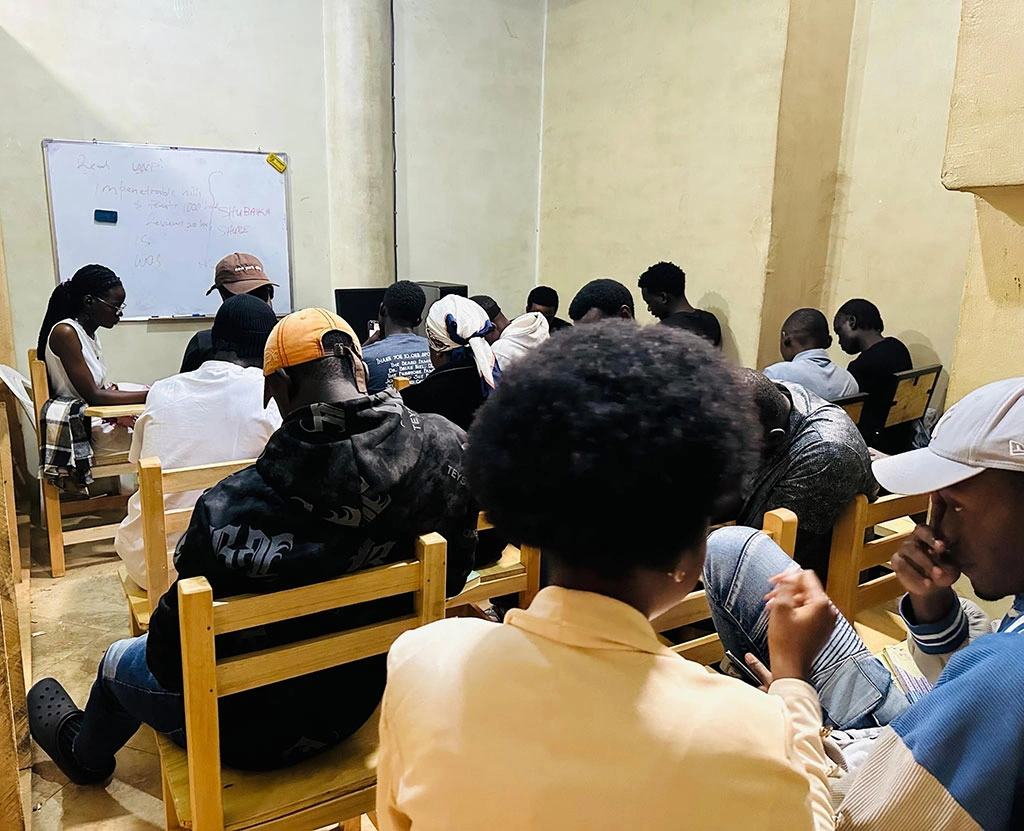
Learners in Uganda can choose from several kinds of institutions, each with its own strengths. Dedicated English language schools and academies focus entirely on the language. They typically offer general English, spoken English, business English and exam preparation, which makes them an excellent choice if fluency is your main goal.
Vocational and technical institutes form a second group, and some of them combine professional training with language courses. A good example is KCI Institute (Kenlink Institute), established in 2009 and located on Gayaza Road in Kampala. It offers certificate and diploma programmes alongside its language courses, which suits learners who want practical career skills and communication skills at the same institution. You can read about its background on the KCI Institute about page, and check entry requirements on its admission page.
International organisations make up a third group. The British Council in Uganda is one of the best-known names in English education and examinations, and it is widely recognised for its teaching resources and its role in IELTS services. Because courses, locations and fees change, always check the official site for current details. Universities and colleges, such as Makerere University, run academic English and communication skills units that mainly serve their own students. Finally, online English schools have grown quickly, allowing people in Kampala, Gulu, Mbale or smaller towns to study from home with a good internet connection. You can see how this works in our online English classes.
Best English Language Schools in Uganda for Beginners
If you are starting from zero or from very basic English, you need patience, clear explanations and plenty of repetition. The best beginner schools create a friendly, low-pressure atmosphere, because many new learners feel shy about making mistakes. Good teachers treat errors as a normal and useful part of learning and celebrate progress instead of punishing slips. This confidence is often what keeps beginners attending class week after week.
The content should also be simple and practical. Beginner lessons work best when they focus on the language people use every day: greetings, introductions, numbers, directions, shopping, family, work and daily routines. Our beginner English course is built around exactly this kind of real-life communication. Alongside it, beginners need a solid foundation in grammar and vocabulary, including the verb “to be”, present simple and continuous tenses, articles, prepositions and question forms. Short grammar explanations followed by many examples work far better than long theoretical lectures, and you can reinforce them at home with our grammar lessons and vocabulary builder.
Pronunciation deserves attention from the very first week, because habits formed early last a lifetime. A good beginner school teaches the alphabet and sounds, then moves on to stress and intonation so that learners are understood easily. Our pronunciation practice page offers exercises you can do on your own. Pictures, short videos, songs and role-plays help too, since they let beginners understand meaning without relying on translation.
A typical beginner pathway unfolds gradually. In the first month, learners study the alphabet, basic sounds, greetings, numbers and simple sentences. Over the next month they add the present tenses, daily routines and everyday vocabulary. By the third month they are using the past tense, describing people and places and holding short conversations. After about six months of regular study, most committed learners can write short messages, read simple texts and talk about familiar topics with real confidence. With several lessons a week, many beginners reach a comfortable A2 or B1 level within six to nine months, although results vary with study time and practice outside class.
Best English Language Schools in Uganda for Advanced Learners
Advanced learners have different needs. They already communicate well, but they want to sound polished, professional and precise. Their goals might include passing a high-level exam, writing flawless reports, leading meetings or studying abroad. A strong advanced programme therefore concentrates on refinement rather than basics.
Writing is usually the first priority. Advanced learners must produce essays, reports, proposals and emails with clear structure, appropriate tone and logical argument. Our English writing skills programme covers paragraphing, cohesion, argument building and editing in detail. At this level, grammar also becomes more subtle. Conditionals, inversion, the passive voice and reported speech are often the difference between a good speaker and an excellent one, and the same is true of idiomatic expressions and natural word combinations. Knowing that we “make a decision” rather than “do a decision” makes English sound natural to a native listener.
Fluency and critical thinking come next. Debates, presentations, group discussions and problem-solving tasks build the spontaneous speaking that high-level communication demands. Professionals benefit especially from training in negotiation, meetings and presentations, which our business English course is designed to deliver for managers, entrepreneurs, accountants and NGO staff. Many advanced learners also need an internationally recognised qualification, which brings us to exam preparation.
IELTS and Exam Preparation: A Key Factor in Choosing a School
If you plan to study, work or migrate abroad, exam preparation may be your top priority. The International English Language Testing System, or IELTS, is accepted by thousands of universities, employers and immigration authorities around the world. The official IELTS website explains the test format, scoring and recognition, and you can book your test through IELTS with the British Council. The test has four parts, Listening, Reading, Writing and Speaking, and scores are reported in bands from 1 to 9. Most universities ask for an overall band between 6.0 and 7.5, depending on the course.
A good IELTS preparation school explains the test format and marking criteria clearly and provides full-length, timed practice tests so that learners get used to the pressure. It gives detailed feedback on both writing tasks, runs mock speaking interviews with experienced trainers, and teaches time management and test-taking strategies. You can learn about our own approach on the IELTS preparation page.
IELTS is not the only option. TOEFL is popular for universities in the United States, and you can find official details on the ETS TOEFL website. Cambridge English qualifications such as B2 First, C1 Advanced and C2 Proficiency are also widely respected, with full information available on the Cambridge English website. Because fees, dates, test centres and requirements change over time, always confirm the latest details on the official exam websites before you book.
Specialised English Courses Worth Considering
Beyond general English, many Ugandan learners benefit from specialised training that matches their daily life or career. Children and teenagers learn best through games, stories and activities that keep them engaged, and starting early pays off throughout their school years. Our English for kids programme is designed to build a love of the language from the beginning.
Uganda’s tourism sector is another area where targeted English matters. From gorilla trekking in Bwindi to safaris in Queen Elizabeth National Park, the industry depends on guides, drivers and hotel staff who can communicate warmly and clearly with international visitors. Our English for travel and tourism course teaches the vocabulary and customer-service phrases that the sector demands. Learners who want to combine language skills with a formal tourism qualification can also look at the programmes offered through KCI Institute’s application page, which lists how to apply to its Kampala campus.
Business English and academic English complete the picture. Entrepreneurs gain a lot from learning how to pitch an idea or write a professional email, while university students need skills in note-taking, essay writing, research and presentation. Choosing a course that fits your exact purpose is usually faster and more motivating than studying general English alone.
Classroom vs Online: Which Is Better in Uganda?
Many learners ask whether they should study in a physical classroom or online, and the honest answer is that both can work well. Classroom learning suits people who prefer face-to-face interaction and need a fixed routine to stay motivated. It is also a sensible choice if your internet connection is unreliable or data is expensive, and it gives you the chance to practise with classmates in person.
Online learning, on the other hand, suits people who live far from Kampala or other major towns, or who have a busy work or family schedule. It saves transport costs and lets you study at times that suit you, as long as you are comfortable with technology and disciplined enough to study independently. Many schools now offer blended learning, which combines classroom sessions with online practice, and KCI Institute lists online programmes alongside its on-campus courses. If you want a fully flexible option, take a look at our online English classes.
How to Choose the Right English School: A Practical Guide
Choosing well starts with knowing your own level and goal. Take a placement test first, since our free English level test gives you an instant estimate. Then decide what you want to achieve, because fluency for daily life, a better job, an exam score and study abroad each call for a different programme.
With that clarity, you can compare schools sensibly. Ask who the teachers are and what qualifications they hold, how big the classes are, and whether the schedule fits your life. Ask for a full written breakdown of tuition, books and exam fees, and request a trial class, because a confident school will welcome the idea. Look for honest reviews and, if possible, speak with former students. It is also wise to confirm that the school is properly registered and operates legally. Finally, ask how progress is measured, since regular tests and feedback are the signs of a serious school. If you would like help comparing your options, contact our team and we will gladly guide you.
Common Mistakes Ugandan English Learners Make
Understanding typical errors helps you choose a school that addresses them directly. One of the most common mistakes is translating word for word from a local language, which produces sentences that sound unnatural in English. Good teachers show you how to think in English instead of converting each word in your head. Another is relying too heavily on grammar books. Grammar matters, but fluency comes from speaking and listening, so even ten minutes of daily conversation practice makes a visible difference.
Fear of making mistakes holds many learners back, yet errors are an essential part of learning, and the more you speak, the faster you improve. Some learners also ignore pronunciation, even though clear pronunciation often makes you easier to understand than perfect grammar does. Others study irregularly, and it helps to remember that three short sessions each week beat one long session once a month. Finally, many people use English only in class. Listening to English radio, watching films with subtitles, reading the news and following English-language accounts online keep the language alive between lessons. Our blog shares new tips and practice material regularly to help with this.
Practical Tips to Learn English Faster
Even the best school works better when you support it with good study habits. Start by setting clear, measurable goals. A target such as “pass IELTS with band 7 in six months” gives you far more direction than “improve my English”. Build a daily routine around it, because fifteen to thirty minutes of focused practice each day creates steadier progress than occasional long sessions.
Learn new words in context rather than memorising isolated lists, and use them in your own speech and writing so they stay with you. Recording yourself speaking is a simple but powerful technique, since listening back reveals pronunciation and fluency issues you cannot hear in the moment. A speaking partner, such as a classmate, friend or colleague who is also learning, gives you regular practice and mutual encouragement. Reading widely, from newspapers to novels and blogs, exposes you to new vocabulary and sentence patterns, and a vocabulary notebook reviewed weekly helps you remember what you read. Above all, ask your teacher for feedback on your writing and speaking, and treat every correction as a free lesson.
How Long Does It Take to Become Fluent?
The time it takes depends on your starting level, your study hours and how much English you are exposed to outside class. As a rough guide, learners who study around eight to ten hours a week can expect to move from beginner to elementary level in about three to four months, and from elementary to intermediate in a further four to six months. Progress from intermediate to upper-intermediate often takes another six to nine months, and reaching an advanced level can take nine to twelve months more. These figures are estimates, not guarantees. Consistency, quality teaching and daily practice matter far more than speed.
Why Choose Learn English Uganda?
At Learn English Uganda, we built our programmes around the real needs of Ugandan learners. We understand the common challenges, from pronunciation influenced by local languages to the pressure of exam deadlines, and we design lessons to solve them. Our courses offer clear pathways from complete beginner to advanced level, with practical lessons that focus on real situations in work, study and daily life. We prepare learners for IELTS and other recognised tests, provide flexible study options for busy schedules, and give supportive, regular feedback along the way. You can learn more about us and see how we help students across Uganda reach their goals, or return to our homepage to choose the course that fits you best.
Frequently Asked Questions
What is the best English language school in Uganda? There is no single best school for everyone. The right choice depends on your level, goals, budget and schedule, so compare teachers, curriculum, class size and results before you decide.
Can I learn English online in Uganda? Yes. Online courses are effective if you have a reliable internet connection and the discipline to study regularly. Look for schools that offer live classes, feedback and speaking practice rather than recorded videos alone.
Which school is best for IELTS preparation? Choose a school with experienced IELTS trainers, full practice tests and detailed writing and speaking feedback. For official test details and booking, visit IELTS.org and the British Council IELTS page.
Are there English schools for complete beginners? Yes. Many schools start from A1 level and teach basic everyday English, and our beginner English course is one example.
How much do English courses cost in Uganda? Fees vary widely by school, course length and format. Always ask for a written breakdown and compare the value you receive, not only the price.
Do I need English certificates for jobs in Uganda? Many employers value proof of English ability, especially in international organisations, tourism, banking and education. Certificates from recognised exams strengthen your CV.
Final Thoughts: Start Your English Journey Today
Choosing among the best English language schools in Uganda is an investment in your future. Beginners need a patient, structured start with strong foundations, while advanced learners need refined writing, confident speaking and targeted exam preparation. In both cases, qualified teachers, a clear curriculum, regular practice and honest feedback are what produce results.
Compare your options carefully, visit schools or attend trial lessons, and choose the programme that matches your goals. Whether you study in a Kampala classroom, at an institute such as KCI Institute, with an international provider such as the British Council, or online, the most important step is to begin and keep going. Ready to take that step? Join Learn English Uganda today and start speaking English with confidence.
Related Posts