

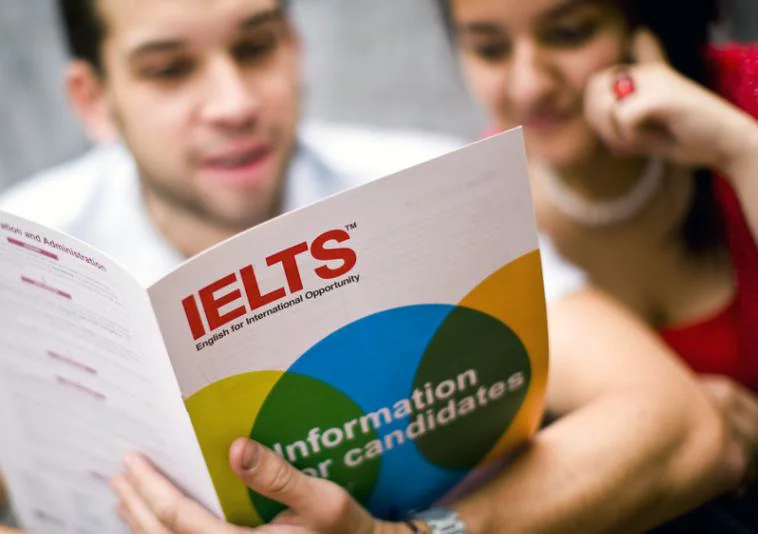

How to prepare for English IELTS. Every year, thousands of Ugandans sit the IELTS exam to study abroad, migrate, register with professional bodies, or land international jobs. Yet many candidates walk into the test room unsure of what to expect, and they leave with a band score far below what they are capable of. The good news is that IELTS is a predictable exam. If you understand how it works and follow a clear plan, you can raise your score in a matter of weeks. This complete guide explains how to prepare for IELTS step by step, from understanding the test format to building a daily study routine, practising each of the four skills, and choosing the right training centre in Kampala.
Whether you are a university graduate targeting Band 7, a nurse aiming for work registration in the UK, or a beginner who is still building confidence, the strategies below will help you prepare smarter, not harder. At Learn English Uganda, we have guided many learners through this journey, and this article shares the exact methods our trainers use in class.
What Is the IELTS Exam and Why Does It Matter?
IELTS stands for the International English Language Testing System. It measures your ability to use English in real situations across four skills: Listening, Reading, Writing, and Speaking. Universities, immigration authorities, employers, and professional councils in the UK, Canada, Australia, New Zealand, Ireland, the USA and many other countries accept IELTS results as proof of English proficiency.
Your result is reported on a band scale from 0 to 9. Each skill receives its own band, and these are averaged to give your overall score. Most undergraduate programmes ask for an overall Band 6.0 to 6.5, postgraduate programmes often want 6.5 to 7.0, and healthcare regulators frequently require 7.0 or higher in every skill. Knowing your target score from day one is the foundation of good IELTS preparation, because it tells you how much work you need to do and where to focus.
For many Ugandans, English is already the language of school and work, which is a strong advantage. However, IELTS tests more than everyday fluency. It rewards accuracy, range of vocabulary, clear organisation, and the ability to perform under strict time limits. That is why even confident speakers benefit from structured preparation. If you want to understand where you stand before you begin, our team at Learn English Uganda can assess your level and recommend a starting point.
IELTS Academic vs IELTS General Training: Which One Should You Take?
Before you open a single practice book, confirm which version of the test you need. Choosing the wrong one is an expensive mistake.
- IELTS Academic is for people applying to universities or colleges, and for some professional registrations such as nursing and medicine. The Reading and Writing sections use academic-style texts and tasks, including describing charts, graphs and diagrams.
- IELTS General Training is mainly for migration (for example, to Canada, Australia or New Zealand), work experience, or secondary education abroad. Its Reading texts come from everyday sources such as adverts, notices and workplace documents, and Writing Task 1 is a letter.
The Listening and Speaking sections are identical for both versions. Always check the exact requirement on the official website of the university, embassy or employer you are applying to. If you are still deciding on your study abroad path, reading about whether you can study English online can also help you plan flexible preparation around work and family commitments.
Understanding the IELTS Test Format
You cannot prepare effectively for an exam you do not understand. Here is a clear breakdown of each section so you know exactly what you are training for.
Listening (about 30 minutes): You hear four recordings and answer 40 questions. The first two recordings are set in everyday social situations, such as booking accommodation or a talk about local facilities. The last two are academic, such as a discussion between students or a university lecture. You hear each recording only once.
Reading (60 minutes): You answer 40 questions based on three long passages. Question types include multiple choice, True/False/Not Given, matching headings, sentence completion and summary completion. There is no extra time to transfer answers, so time management is critical.
Writing (60 minutes): There are two tasks. Task 1 requires at least 150 words (describing visual data for Academic, or writing a letter for General Training). Task 2 is an essay of at least 250 words responding to a point of view, argument or problem. Task 2 carries more weight, so it deserves more of your practice time.
Speaking (11 to 14 minutes): This is a face-to-face conversation with a certified examiner. Part 1 covers familiar topics like your home, studies or work. Part 2 gives you a cue card and one minute to prepare a two-minute talk. Part 3 is a deeper discussion connected to the Part 2 topic.
IELTS is available on paper and on computer at approved test centres in Kampala. The content is the same, so choose the format you are most comfortable with. If you type faster than you write, the computer-delivered test can save valuable minutes in the Writing section.
Step 1: Take a Diagnostic Test and Set Your Target Band
The first practical step in any IELTS study plan is to find out your current level. Sit a full practice test under real exam conditions: time yourself strictly, work in a quiet room, and do not use a dictionary. Score your Listening and Reading using the answer key, and ask a qualified trainer to grade your Writing and Speaking against the official band descriptors.
Compare your result with your target band. The gap between the two tells you how much preparation time you need. As a general guide, moving up one full band usually takes around two to three months of consistent, focused study. If your English foundation needs more work, it is worth reading our guide on how long it takes to learn English so you can set realistic expectations.
Step 2: Build a Realistic IELTS Study Plan
Candidates who score highly rarely rely on last-minute cramming. They follow a plan. A good IELTS study plan breaks your preparation into weekly goals and gives every skill regular attention, with extra time for your weakest areas.
Here is a sample eight-week structure that works well for learners aiming to move from Band 5.5 to Band 6.5 or 7:
- Weeks 1–2: Foundations. Learn the test format, question types and band descriptors. Review grammar essentials such as tenses, articles, complex sentences and linking words.
- Weeks 3–4: Skill building. Practise one or two question types per day in Reading and Listening. Write one Task 1 and one Task 2 response each week and get feedback.
- Weeks 5–6: Speed and accuracy. Complete full timed sections. Record yourself answering Speaking questions and review your fluency and pronunciation.
- Weeks 7–8: Exam simulation. Sit at least two full mock tests under real conditions, analyse every mistake, and polish your strategies.
Aim for at least one to two hours of study per day, six days a week. Short, daily sessions are far more effective than one long session at the weekend. If you are a complete beginner, start with an English for Beginners programme before moving into IELTS-specific practice, because exam techniques only work when your basic English is solid.
Step 3: Master IELTS Listening
Listening is often the section where Ugandan candidates can gain marks quickly, because the skill improves rapidly with daily exposure. The challenge is that you hear each recording only once, and speakers use a range of accents, including British, Australian, American and Canadian.
Use these proven IELTS listening tips:
- Read ahead. Use the short pauses before each part to read the questions and underline keywords. Predict the type of answer you need: a number, a name, a date or a noun.
- Watch for distractors. Speakers often give one answer and then correct themselves. Wait for the final information before you write.
- Check spelling and word limits. An answer with a spelling mistake or too many words is marked wrong. Practise spelling common IELTS words like accommodation, environment, government and necessary.
- Train your ear daily. Listen to BBC podcasts, TED Talks and international news for 20 to 30 minutes a day, and gradually move from listening with transcripts to listening without them.
Joining a structured spoken English class in Uganda also sharpens your listening, because you spend hours every week understanding different speakers in real time.
Step 4: Improve Your IELTS Reading Speed and Accuracy
Many candidates understand the passages but run out of time. IELTS Reading is as much about strategy as it is about English. With 40 questions in 60 minutes, you have roughly 20 minutes per passage, including the time to write your answers.
- Skim first, then scan. Spend two to three minutes skimming the passage to understand the main idea of each paragraph. Then scan for specific keywords, names and numbers linked to each question.
- Master True/False/Not Given. “False” means the passage contradicts the statement. “Not Given” means the passage says nothing about it. Do not use your own knowledge; rely only on the text.
- Learn paraphrasing. Questions rarely use the exact words from the passage. Build your ability to recognise synonyms, for example “rise” and “increase”, or “elderly people” and “senior citizens”.
- Do not get stuck. If a question takes more than a minute or two, move on and return to it later. Never leave a blank; there is no penalty for a wrong answer.
Read widely outside your practice books. Science articles, business news, travel features and opinion columns all build the vocabulary and reading stamina you need. Consistent reading also supports long-term fluency, as explained in our article on how to learn English faster.
Step 5: Write High-Scoring IELTS Essays and Reports
Writing is usually the lowest-scoring skill for IELTS candidates worldwide, and Uganda is no exception. Examiners assess four criteria: Task Achievement (or Task Response), Coherence and Cohesion, Lexical Resource, and Grammatical Range and Accuracy. Understanding these criteria is the fastest way to improve.
For Writing Task 1 (Academic): Start with a sentence that paraphrases the question. Follow with a clear overview that summarises the main trends or the most striking features. Then write two body paragraphs that group and compare the key data. Do not give opinions and do not try to describe every single number. For General Training, make sure your letter covers all three bullet points and uses the correct tone (formal, semi-formal or informal).
For Writing Task 2: Spend around 40 minutes here. Use a simple, reliable structure:
- Introduction: Paraphrase the question and state your position clearly.
- Body paragraph 1: Present your first main idea, explain it, and support it with an example.
- Body paragraph 2: Present your second main idea with explanation and an example.
- Conclusion: Summarise your position without introducing new ideas.
Common mistakes that lower scores include memorised phrases that do not fit the question, writing under the word limit, drifting off-topic, and repeating the same vocabulary. Practise writing at least two essays a week and, crucially, get professional feedback. Self-study alone rarely fixes writing problems because it is hard to see your own errors. Our experienced trainers mark essays against the official descriptors as part of our English and IELTS courses.
Step 6: Speak Fluently and Confidently in the IELTS Speaking Test
The Speaking test is a conversation, not an interrogation. Examiners want to hear natural, extended answers that show fluency, a good range of vocabulary, grammatical variety and clear pronunciation. Here is how to prepare:
- Extend your answers. In Part 1, avoid one-word replies. Answer the question, give a reason, and add a short example.
- Use the one-minute preparation wisely in Part 2. Write brief notes for each point on the cue card, and plan a simple beginning, middle and end so you can speak for the full two minutes.
- Develop ideas in Part 3. These questions are more abstract. Compare the past and present, discuss advantages and disadvantages, and speculate about the future.
- Work on pronunciation, not accent. You do not need a British or American accent. You need clear word stress, sentence stress and intonation that make you easy to understand.
- Practise out loud every day. Record yourself on your phone, listen back, and note hesitations, grammar slips and overused words.
The single most effective way to raise your Speaking band is regular conversation with a trained teacher who corrects you in real time. Our Spoken English Course is designed exactly for this, helping learners build the fluency and confidence that the IELTS examiner is looking for.
Step 7: Expand Your Vocabulary and Grammar the Smart Way
Lexical Resource and Grammatical Range and Accuracy together make up half of your Writing and Speaking scores. Instead of memorising long lists of rare words, focus on vocabulary you can use accurately in context.
- Learn topic-based vocabulary for common IELTS themes: education, health, environment, technology, work, crime, tourism and globalisation.
- Study collocations, which are natural word partnerships such as “make a decision”, “heavy traffic” and “raise awareness”.
- Keep a vocabulary notebook or digital flashcards, and review them using spaced repetition.
- Practise complex sentence structures, such as conditionals, relative clauses and passive forms, but always prioritise accuracy over complexity.
For learners who want a structured grammar and vocabulary foundation before they tackle exam practice, exploring language courses at KCI Institute is another useful option, as their English programme runs across three progressive levels.
Step 8: Take Full Mock Tests Under Real Exam Conditions
Mock tests turn knowledge into performance. They train your concentration, reveal your timing problems, and reduce anxiety on the real test day. In the final month of your preparation, sit at least one full mock test every week.
After every mock test, spend as much time reviewing as you did taking it. For each wrong answer, ask yourself why you made the mistake: was it vocabulary, misreading the question, poor time management, or a spelling error? Keep an error log and look for patterns. This reflective process is what separates candidates who plateau from those who keep improving.
Always use authentic practice materials, such as the official Cambridge IELTS practice books and resources from the official test providers. Unofficial materials can be poorly written and give you a false picture of your level.
Common IELTS Mistakes Ugandan Candidates Should Avoid
Over years of training learners in Kampala, our trainers have noticed a few mistakes that appear again and again. Avoiding them can easily add half a band to your score.
- Translating from local languages. Thinking in Luganda, Runyankole or another first language and translating into English can produce unnatural sentence structures. Train yourself to think directly in English.
- Using overly formal or old-fashioned expressions. Phrases learned from old textbooks can sound unnatural. Aim for clear, modern English.
- Ignoring the question. Many Task 2 essays are well written but do not fully answer what was asked. Underline every part of the question before you plan.
- Memorising answers. Examiners are trained to spot memorised responses, and they lower your score for them.
- Booking the test too early. Sit the exam only when your mock test results consistently reach your target band.
Self-Study vs IELTS Classes: Which Is Better?
Self-study is possible, especially for Listening and Reading, where answers are either right or wrong. Free resources, practice books and online videos can take you a long way. However, Writing and Speaking are scored subjectively by trained examiners, and it is very difficult to judge your own performance accurately.
IELTS classes give you expert feedback, a clear structure, accountability, and the chance to practise speaking with real people. They also save time, because a good trainer quickly identifies the specific habits that are holding your score back. Many successful candidates combine both approaches: they attend classes for guidance and feedback, and then study independently at home every day.
If your schedule is busy, flexible options exist. Our article on whether you can study English language online explains how virtual lessons can fit around work, and KCI Institute also shares useful insights on English learning schools for adults in Uganda.
How to Choose the Best IELTS Training Centre in Kampala
Kampala has many English and IELTS training options, and they are not all equal. When comparing centres, look for the following:
- Qualified, experienced trainers who understand the official IELTS band descriptors.
- Small class sizes so that you receive personal attention and regular speaking practice.
- Regular marked writing with detailed, actionable feedback.
- Full mock tests under real exam conditions.
- Flexible schedules, including evening, weekend and online classes for working adults.
- Transparent fees with no hidden charges.
To compare your options in more depth, read our guides on the best English language schools in Uganda and the leading English training centers in Kampala. You can also explore this helpful overview of English learning centers in Uganda from our partners at KCI Institute. If budget is a key factor, our breakdown of English language school fees in Uganda will help you plan.
IELTS Preparation for Working Adults and Foreigners in Uganda
Preparing for IELTS while working full time is challenging but very achievable. The key is consistency. Use your commute to listen to English podcasts, read one article during your lunch break, and set aside one focused hour in the evening for writing or speaking practice. Weekend classes can provide the structure and feedback you need without affecting your job.
We also welcome international learners living in Uganda, including refugees, expatriates and students from neighbouring countries such as South Sudan, the DRC, Burundi and Rwanda, who need IELTS for further study or relocation. Our English for Foreigners in Uganda programme builds the core language skills that make IELTS preparation far easier. Adult learners can also browse our dedicated English courses in Kampala for adults and our list of trusted English training schools for adults in Uganda.
What to Do in the Final Week Before Your IELTS Exam
The last week is about confidence and sharpness, not learning huge amounts of new material. Follow this checklist:
- Take one final full mock test early in the week, then review it calmly.
- Revise your error log and your key vocabulary lists.
- Practise a few Speaking Part 2 cue cards out loud each day.
- Confirm your test date, venue, reporting time and the identification document you registered with (usually your passport).
- Plan your route to the test centre so you arrive early and relaxed.
- Sleep well, eat properly, and avoid late-night cramming the day before.
Exam Day Tips for a Higher IELTS Band Score
On the day itself, stay calm and focus on the task in front of you. In Listening, write answers as you hear them and check spelling carefully. In Reading, keep an eye on the clock and move on from difficult questions. In Writing, spend a few minutes planning before you start and leave time to proofread. In Speaking, smile, relax, and treat the examiner as a friendly person who wants to hear you communicate. If you do not understand a question, it is perfectly acceptable to ask the examiner to repeat it.
Remember that one difficult section does not decide your whole result. Put each part behind you and give your full attention to the next.
How Long Does It Take to Prepare for IELTS?
Preparation time depends on your current level, your target band and how much time you can study each day. Learners who already have a strong English foundation may need four to six weeks of focused exam practice. Those who need to improve their general English may need three to six months. Our detailed article on how many months it takes to become fluent in English will help you estimate a timeline that suits your goals.
Frequently Asked Questions About IELTS Preparation
Can I prepare for IELTS in one month?
Yes, if your English is already close to your target band. One month of intensive, well-structured practice can polish your techniques and boost your score by around half a band. If you need a bigger improvement, allow more time.
What is a good IELTS score?
It depends on your goal. Band 6.5 is widely accepted for university admission, while Band 7 or above is considered very good and is often required for professional registration and competitive immigration programmes.
Which is easier, IELTS on paper or on computer?
The content and difficulty are the same. Choose computer-delivered IELTS if you type quickly and are comfortable with screens, and choose paper if you prefer writing by hand.
Where can I get IELTS classes in Kampala?
Learn English Uganda offers structured English and exam preparation classes in Kampala, with flexible schedules for students and working adults. Check our upcoming intakes to find a start date that suits you.
Do I need a strong English background to start IELTS preparation?
Not necessarily, but a basic foundation helps. If you are starting from a low level, begin with a general English course and then move on to IELTS-focused training.
Start Your IELTS Preparation With Expert Support Today
Knowing how to prepare for IELTS is the first step. Putting that knowledge into consistent daily practice, with the right guidance and feedback, is what earns the band score you need. With a clear study plan, focused practice in all four skills, regular mock tests and expert support, you can walk into the exam room confident and prepared.
At Learn English Uganda, our experienced trainers help learners at every level build the English skills and exam strategies that lead to success. Browse the latest tips on our English learning blog, or take the next step and apply now to secure your place in our next class.
You can also explore more study opportunities with our partners at KCI Institute, where you can browse their full range of UVTAB-accredited courses, learn more about the institute, review their admission process, submit an online application, or log in through the KCI student portal. Your international future starts with the right preparation, so start today.
Related Posts
Spoken English Classes in Uganda
Posted on
English Learning for Somalia People
Posted on