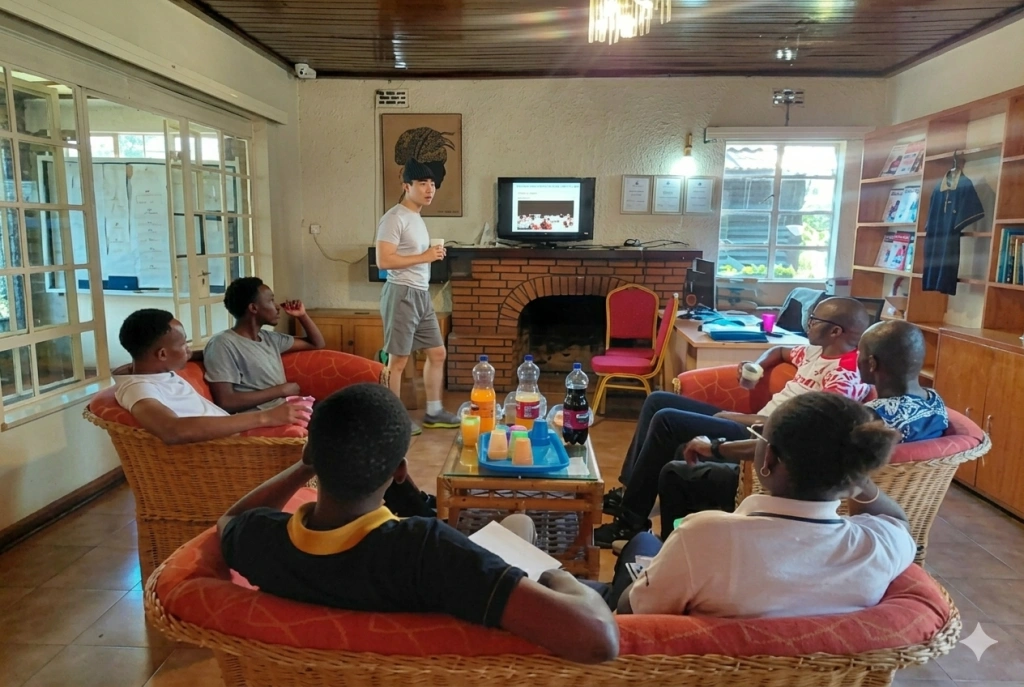


English Speaking Training Course. Speaking English confidently can transform your career, your studies and your everyday life. Yet many people in Uganda who have studied English for years still hesitate when they need to speak in an interview, a meeting, a classroom or a conversation with an international visitor. The solution is not more grammar exercises. It is focused, practical speaking training.
An English speaking training course is designed to get you talking from the very first lesson. It builds fluency, pronunciation, vocabulary and confidence through guided practice, real-life role plays and expert feedback. In this guide, the trainers at Learn English Uganda explain what an English speaking training course includes, who it is for, how it is structured, how long it takes, and how to choose the right course in Kampala.
What Is an English Speaking Training Course?
An English speaking training course is a structured programme that focuses mainly on spoken communication. While general English courses divide time between reading, writing, grammar and speaking, a speaking course puts conversation at the centre. Most of the class time is spent speaking, listening and responding, with grammar and vocabulary taught in ways that directly support speaking.
The aim is practical: to help you express your ideas clearly, understand others easily, and communicate confidently in real situations, from ordering food and negotiating prices to leading meetings, giving presentations and passing interviews. Our flagship Spoken English Course is built on exactly this approach.
Who Should Join an English Speaking Training Course?
English speaking training is valuable for almost anyone who wants to communicate more effectively. It is especially helpful for:
- Job seekers preparing for interviews and wanting to stand out from other candidates.
- Working professionals who need to speak in meetings, make presentations, handle clients or lead teams.
- University and secondary school students who want to take part in discussions, debates and oral exams with confidence.
- Business owners and traders who want to serve more customers and negotiate better deals.
- Tourism and hospitality workers, including guides, drivers, receptionists and waiters who interact with international guests.
- Foreigners and refugees living in Uganda who need practical English for daily life and work.
- IELTS candidates who want to improve their Speaking band score.
- Anyone who feels shy about speaking English and wants to build confidence in a supportive environment.
If you are new to Uganda, our English for Foreigners in Uganda programme combines speaking training with practical language for everyday life.
Benefits of Taking an English Speaking Training Course
Why invest in a dedicated speaking course rather than studying alone? Here are the key benefits:
- Guaranteed speaking time: Every lesson gives you real opportunities to talk, something that is hard to find in daily life.
- Expert correction: A trained teacher notices and corrects pronunciation, grammar and vocabulary mistakes you may not realise you are making.
- Faster fluency: Regular, structured practice builds speaking speed and natural flow much faster than self-study.
- Greater confidence: Practising in a safe, friendly classroom helps you overcome fear and shyness.
- Better career opportunities: Strong communication skills are among the qualities employers value most.
- Real-life preparation: Role plays and simulations prepare you for interviews, meetings, customer service and social situations.
- Motivation and accountability: Learning with a teacher and classmates keeps you consistent and committed.
What You Will Learn in an English Speaking Training Course
A well-designed English speaking training course covers a wide range of practical skills. Here is an example of the key modules you can expect:
Module 1: Everyday Conversation
Greetings, introductions, small talk, talking about yourself, family, hobbies and routines, making plans and invitations, and keeping a conversation going naturally.
Module 2: Pronunciation and Clear Speech
English sounds, vowel pairs, difficult consonants such as “th”, “l” and “r”, word stress, sentence stress, rhythm and intonation. The focus is on being clearly understood, not on changing your accent.
Module 3: Vocabulary for Speaking
High-frequency words, useful phrases, collocations, phrasal verbs and idioms that help you speak naturally and express ideas precisely.
Module 4: Grammar for Fluency
The key tenses and structures needed in conversation: present, past and future forms, questions, comparisons, conditionals and polite requests, practised through speaking activities rather than written drills.
Module 5: Listening and Responding
Understanding different accents, following fast speech, asking for clarification, and responding quickly and appropriately.
Module 6: Expressing Opinions and Discussion Skills
Giving opinions, agreeing and disagreeing politely, supporting your ideas with reasons and examples, and taking part in group discussions and debates.
Module 7: Workplace and Business Communication
Meetings, telephone calls, presentations, negotiations, customer service and professional small talk.
Module 8: Public Speaking and Presentations
Structuring a talk, using your voice and body language, managing nerves, and handling questions from an audience.
Module 9: Interview Skills
Answering common interview questions, talking about your experience and strengths, and making a strong first impression.
English Speaking Course Levels: From Beginner to Advanced
Good speaking courses are divided into levels so that every learner studies at the right pace. A placement test at the start of the course identifies your current level.
- Beginner: For learners with little or no English. The focus is on essential words, simple sentences, greetings, numbers and everyday situations. Our English for Beginners programme is the perfect starting point.
- Elementary and Pre-Intermediate: For learners who can manage basic conversations but struggle with longer discussions. The focus is on expanding vocabulary, using more tenses and speaking in longer sentences.
- Intermediate: For learners who can communicate in most everyday situations but want more fluency, accuracy and confidence, especially at work.
- Upper-Intermediate and Advanced: For confident speakers who want to sound more natural, use advanced vocabulary and idioms, lead discussions, present professionally and prepare for exams such as IELTS.
For comparison, KCI Institute structures its English language course in three progressive levels of three months each, combining verbal and written training.
How an English Speaking Training Course Is Taught
The teaching methods in a speaking course are very different from traditional classroom lessons. Expect lessons to be active, interactive and fun. Common methods include:
- Pair and group work: You practise conversations with classmates so that everyone speaks as much as possible.
- Role plays: You act out real situations such as job interviews, hotel check-ins, customer complaints or business meetings.
- Discussions and debates: You share opinions on interesting topics, from technology and education to football and current affairs.
- Presentations: You prepare and deliver short talks, building your public speaking confidence step by step.
- Pronunciation drills and shadowing: You repeat after audio models to improve sounds, stress and rhythm.
- Storytelling: You describe experiences and events, practising past tenses and fluency.
- Recording and feedback: Your speaking is recorded so you and your teacher can review progress and target areas to improve.
This communicative approach is proven to build fluency far faster than memorising grammar rules. It is also the approach behind our spoken English classes in Uganda.
What a Typical English Speaking Lesson Looks Like
If you have never attended a speaking course, you may wonder what actually happens in class. Here is an example of a typical 90-minute lesson at intermediate level:
- Warm-up (10 minutes): Learners chat in pairs about their week, a news story or a fun question, helping everyone relax and start thinking in English.
- Language focus (20 minutes): The trainer introduces useful phrases for the lesson topic, for example, how to make suggestions in a meeting, and practises pronunciation of key words.
- Controlled practice (15 minutes): Learners use the new phrases in short, guided dialogues with a partner.
- Role play or discussion (30 minutes): Small groups act out a realistic situation, such as planning a company event or solving a customer complaint, using the new language freely.
- Feedback (10 minutes): The trainer shares common mistakes and good examples heard during the activities, without singling anyone out.
- Wrap-up and homework (5 minutes): Learners set a small speaking goal for the week, such as using three new phrases at work.
Notice that learners speak for most of the lesson. The trainer guides, models and corrects, but the learners do the talking. This balance is what makes speaking courses so effective.
Real Results: What You Can Do After an English Speaking Course
What changes can you expect after completing an English speaking training course? While every learner is different, graduates commonly report that they can:
- Introduce themselves confidently and make small talk with new people.
- Answer interview questions clearly, with relevant examples from their experience.
- Take an active part in meetings, sharing ideas and asking questions without fear.
- Deliver short presentations with good structure, clear pronunciation and confident body language.
- Handle phone calls, customer enquiries and complaints professionally.
- Understand speakers with different accents, including visitors from abroad.
- Think directly in English instead of translating from their first language.
Perhaps the most important result is confidence. Many learners who once avoided speaking English now volunteer to speak, lead discussions and represent their organisations, which opens doors to new responsibilities, promotions and opportunities. Improvement is gradual, but with regular attendance and daily practice, the progress becomes clear to you and to the people around you.
Learners often say that the biggest change is not in their grammar or vocabulary, but in how they feel when someone speaks to them in English. Instead of anxiety, they feel ready. That shift in mindset is the true goal of speaking training, and it stays with you long after the course ends.
How Long Does an English Speaking Training Course Take?
The length of a speaking course depends on your starting level, your goals and the intensity of the programme. As a general guide:
- Short intensive courses of four to eight weeks are ideal for building confidence quickly or preparing for a specific event such as an interview or a trip abroad.
- Standard courses of around three months per level suit most learners who want steady, lasting improvement.
- Long-term programmes of six to twelve months take beginners all the way to confident, fluent speaking.
Your progress also depends on how much you practise outside class. Learners who speak English every day, even for a few minutes, improve much faster. For more detail, read our guides on how long it takes to learn English and how many months it takes to become fluent in English.
Class Schedules: Morning, Evening, Weekend and Online
A good English speaking training course fits around your life. Common schedule options include:
- Morning and daytime classes for students, job seekers and people with flexible schedules.
- Evening classes for working professionals who want to learn after work.
- Weekend classes for learners with busy weekday schedules.
- Online classes for learners outside Kampala or those who want to avoid traffic.
- One-to-one private lessons for faster, personalised progress at times that suit you.
If you prefer to learn from home, read our article Can I study English language online? and KCI Institute’s guide on studying English online.
Corporate English Speaking Training for Companies in Uganda
Many organisations in Uganda invest in English speaking training for their staff. Strong communication skills improve customer service, teamwork, sales performance and the company’s professional image, especially when working with international clients and partners.
Corporate English training can be customised for your industry and delivered at your workplace, at the training centre or online. Popular focus areas include:
- Customer service and telephone English
- Presentation and public speaking skills
- Meeting and negotiation skills
- Hospitality and tourism English for hotels, lodges and tour companies
- Sales and marketing communication
- Leadership communication for managers and supervisors
If your organisation is interested in staff training, contact us through our About Us page to discuss a tailored programme.
English Speaking Training for Tourism and Hospitality Professionals
Uganda’s tourism industry depends on excellent communication. Tour guides, safari drivers, hotel receptionists, restaurant staff and tour consultants interact with visitors from around the world every day. Clear, confident English helps them deliver outstanding service, explain attractions, handle requests and complaints, and earn positive reviews.
A speaking course for tourism professionals focuses on greeting and welcoming guests, describing destinations and wildlife, giving directions and instructions, explaining itineraries, handling problems politely, and making friendly conversation. Learners building a tourism career can combine English speaking training with professional qualifications through KCI Institute’s UVTAB-accredited courses, which include practical tourism training.
English Speaking Training and IELTS Preparation
The IELTS Speaking test is a face-to-face conversation with an examiner, scored on fluency and coherence, vocabulary, grammar and pronunciation. An English speaking training course is excellent preparation because it develops exactly these skills.
Learners preparing for IELTS benefit from practising the three parts of the Speaking test: answering personal questions, speaking for two minutes on a topic, and discussing more abstract ideas. Speaking training builds the fluency and confidence needed to perform well under exam conditions, and trainers can provide mock Speaking tests with feedback based on the official band descriptors.
What Certificate Will You Receive?
At the end of each level, learners who complete the course and pass the final assessment usually receive a certificate of completion. This certificate shows the level you have reached and can be added to your CV, job applications and school records.
For internationally recognised proof of English ability, such as for university admission or visas abroad, you may also need to take an official exam like IELTS. A speaking course is an excellent foundation for this next step.
How Much Does an English Speaking Training Course Cost?
Fees for English speaking courses in Uganda vary depending on the course length, level, class size and format. Group classes are usually the most affordable option, while private one-to-one lessons and corporate programmes cost more because they are fully customised.
When comparing prices, consider what is included, such as learning materials, placement tests, recorded lessons, certificates and additional speaking practice sessions. For a detailed overview of typical costs, read our guides on how much an English course costs in Uganda and English language school fees in Uganda.
How to Choose the Best English Speaking Training Course in Kampala
With many options available, use this checklist to choose the right course:
- Speaking-focused lessons: Most class time should be spent speaking, not copying notes.
- Qualified, experienced trainers who correct mistakes clearly and encouragingly.
- Small class sizes so every learner has plenty of speaking time.
- A placement test to put you in the right level.
- Practical, real-life topics relevant to your work and goals.
- Flexible schedules, including evenings, weekends and online options.
- Clear fees and a certificate on completion.
- Positive reviews from former students.
To compare schools, read our guides to the English training centers in Kampala, the best English language schools in Uganda and the English courses in Kampala for adults. KCI Institute’s overviews of English learning centers in Uganda and English learning schools for adults in Uganda offer further comparisons.
Tips to Get the Most From Your English Speaking Course
- Attend every class. Speaking skills build through regular practice, so consistency matters.
- Speak as much as possible. Volunteer answers, ask questions and take part fully in activities.
- Welcome correction. Every correction is a chance to improve.
- Practise between lessons. Use English with friends and colleagues, and record voice notes.
- Keep a phrase notebook. Write down useful expressions you learn and use them in real conversations.
- Listen to English daily. Radio, podcasts, films and news all improve your speaking.
- Set clear goals. Decide what you want to achieve, such as passing an interview or presenting at work, and share it with your trainer.
For more techniques, read our guide on how to learn English faster as a beginner.
How to Enrol in an English Speaking Training Course
Joining a course is simple. Most learners follow these steps:
- Choose your course and schedule from our list of English courses.
- Check the next start date on our intakes page.
- Complete the application on our Apply Now page.
- Take a placement test so we can place you in the right level.
- Confirm your place and start speaking English with confidence.
Frequently Asked Questions About English Speaking Training Courses
What is the difference between a general English course and an English speaking course?
A general English course covers reading, writing, grammar, listening and speaking equally. An English speaking training course focuses mainly on conversation, fluency, pronunciation and confidence.
Can a complete beginner join an English speaking course?
Yes. Beginner levels start with the basics, including greetings, simple sentences and everyday phrases.
How quickly will my speaking improve?
Many learners notice more confidence within a few weeks of regular classes. Significant improvement in fluency usually comes after one or more full levels of study.
Are online English speaking classes effective?
Yes, when they include live lessons with a qualified trainer and plenty of speaking practice in small groups or one-to-one sessions.
Do you offer English speaking training for companies?
Yes. Corporate programmes can be customised for your staff and industry and delivered at your workplace, at our centre or online.
Start Your English Speaking Training Course Today
Confident spoken English opens doors to better jobs, stronger business, academic success and international opportunities. An English speaking training course gives you the structure, practice and expert guidance you need to speak clearly and fluently, whatever your current level.
Whether you are a student preparing for university, a job seeker getting ready for interviews, a professional aiming for promotion, a business owner growing your customer base, or a newcomer settling into life in Uganda, the right speaking course will help you reach your goals faster. Every week of practice builds on the last, and before long you will notice that speaking English no longer feels like a challenge, but a natural part of your everyday life.
Ready to take the next step? Read more tips on our English learning blog, or apply now to reserve your place in our next English speaking training course.
You can also explore further opportunities with our partners at KCI Institute: learn about the institute, review the admission process, submit your application online, or access the KCI student portal.
Related Posts

Spoken English Classes in Uganda
Posted on