



Join an English Language School in Uganda. Deciding to join an English language school is one of those decisions that quietly changes everything else — the jobs you can apply for, the university programmes you qualify for, and how comfortable you feel navigating daily life in Kampala. Uganda’s language school sector has grown fast enough that choosing where to enrol can feel overwhelming, with everything from small tutoring centres to established institutions all claiming to be the best option. This guide walks through exactly what joining an English language school in Uganda involves, from picking the right level to what happens on your first day of class, so you can enrol with confidence instead of guesswork.
At Learn English Uganda, we designed our enrolment process to be simple enough to complete in one visit. If you already know you’re ready, you can go straight to our apply now page. If you’d rather understand the full process first, keep reading.
Why Joining a Structured English School Beats Learning Alone
Plenty of people try to learn English from apps, YouTube videos, or casual conversation with friends before deciding to join a proper school, and most eventually hit the same wall: informal learning builds vocabulary but rarely fixes grammar habits or pronunciation patterns that have already set in. A structured English language school gives you a placement test, a syllabus that builds skills in order, a tutor who corrects mistakes in real time, and classmates working toward the same goal — all of which speed up progress dramatically compared to learning alone. It’s the reason searches for how to study English language in Uganda keep climbing every year.
Who Should Consider Joining an English Language School in Uganda
You don’t need to be a total beginner to benefit from enrolling. Our student base includes secondary school leavers preparing for English-taught university programmes, working professionals who need sharper business English for interviews and reports, refugees and new arrivals building day-to-day survival English, and foreign nationals — diplomats, NGO staff, traders — relocating to Kampala for work. Each group joins for a different reason, but all of them benefit from the same thing: a placement test that puts them in the right level from day one instead of wasting months in a class that’s too easy or too hard.
Step 1: Decide Which Level You Should Join
Most reputable schools, including ours, run three progressive levels — Beginner, Intermediate and Advanced — each lasting around three months. If you’ve never studied English formally, Beginner is the right entry point. If you can hold a basic conversation but struggle with grammar, writing or professional vocabulary, Intermediate is usually the better fit. If you’re already conversational and want polish for university, leadership or client-facing work, Advanced will get you there fastest. A short placement conversation before you commit removes the guesswork — full details are on our course details page.
Step 2: Compare Schools Before You Commit
Not every institution advertising English classes runs the same programme, so it’s worth comparing at least two or three before enrolling. Look at how each school structures its levels, who teaches the classes, and what past students say. Our own comparisons of the best language centres in Kampala and the best English teaching schools in Uganda are a good starting point, and it’s worth cross-checking against independent roundups such as Uganda Language School’s list of language schools in Kampala city and their separate roundup of the best English schools in Uganda.
Step 3: Understand the Real Cost of Joining
Budget for two things: a one-time admission fee and the tuition for each level. Across most established schools, the admission fee sits around UGX 50,000 for East African citizens or roughly USD 40 for foreign nationals, while tuition runs about UGX 500,000 per three-month level — a structure mirrored at institutions like Kenlink Institute, where a full three-level course comes to around UGX 1,500,000 paid upfront. We’ve laid out the complete breakdown, including what’s included and what isn’t, in how much an English course costs in Uganda.
Step 4: Gather Your Admission Documents
Enrolment paperwork is deliberately minimal. Most schools ask for a valid national ID or passport, one recent passport-size photograph, and payment of the admission fee before your first class. Some also run a brief written or spoken placement test on the day, so it helps to arrive a little early. You can review our exact requirements and submit everything directly through our apply now page.
Step 5: Choose Online or In-Person Classes
Joining doesn’t have to mean showing up to a physical classroom every day. In-person classes work well for beginners who benefit from face-to-face correction and a fixed routine, while online classes suit working professionals, parents, or students living outside Kampala. Several schools have invested heavily in this option — Uganda Language School’s online English lessons are a good example — and we offer both formats across all three levels, so you can join in whichever way actually fits your week.
What Your First Weeks After Joining Look Like
Most schools open with a placement assessment, followed by an orientation covering the syllabus, attendance expectations, and how progress is tracked. The first two to three weeks typically focus on establishing a comfortable baseline — vocabulary, sentence structure, and listening comprehension — before moving into more demanding material. Students who show up consistently and complete homework between classes generally see noticeable improvement by the six-week mark, well before the three-month level is complete.
It also helps to know what a typical week looks like once you’ve joined. Most programmes run classes two to four times a week, with each session lasting between one and two hours, leaving enough time between lessons to review notes and practise vocabulary rather than cramming everything into back-to-back sessions. Tutors usually assign light homework — short readings, a few sentences to write, or a recording to listen to — specifically because the gap between classes is where a lot of real learning happens. New students sometimes underestimate this and are surprised at how much faster they progress once they treat the time between lessons as part of the course rather than a break from it.
How Long It Takes to See Results After Enrolling
This is one of the most common questions we get before someone joins, and the honest answer is that it depends on your starting point and how much you practise outside class. Most learners starting from zero need close to nine months across all three levels to reach solid working fluency, though learners with some prior English can progress faster after testing into a higher level. We cover this in more depth, including what actually slows learners down, in how long it takes to learn English.
What to Ask Before You Sign Up
Before handing over your admission fee, ask a few direct questions: Is there a placement test? What happens if I need to pause and resume later? Is there a written refund policy if the course isn’t the right fit? How large are the classes? A school that answers these clearly and in writing is generally more trustworthy than one that only gives verbal assurances. It’s also worth reading a school’s about us page to understand who’s actually running the programme and how long they’ve been operating.
Beyond English: Schools That Let You Add a Second Language Later
Many students who join for English later decide to add a second language once their confidence grows. If that’s on your radar, it’s worth choosing a school connected to a wider language programme from the start. Uganda Language School’s full course catalogue includes French, German and Swahili alongside English, and Kenlink Institute’s language courses follow the same three-level model across multiple languages, so the study habits you build joining an English class transfer directly if you decide to expand later.
Joining English Classes as a Step Toward Vocational or Professional Training
For a good number of our students, English is the entry point to something bigger. Once conversational and written English reach a working level, many go on to join vocational or professional programmes taught in English, such as Kenlink Institute’s UVTAB-certified courses or business-focused training like their business consultation programme. Joining a school that takes your English seriously from day one makes every course that follows easier to complete.
Common Mistakes People Make When Joining an English School
The most common mistake is skipping the placement test and self-selecting a level, which usually leads to frustration within the first two weeks. The second is choosing a school purely on price without checking tutor experience or class size. The third is treating class time as the only practice you need — students who read, listen to English media, and speak deliberately with classmates outside lesson hours consistently progress faster than those who don’t. A fourth, less obvious mistake is joining without asking how attendance and missed classes are handled — life in Kampala doesn’t always cooperate with a fixed timetable, and a school with no policy for catching up after a missed session can quietly derail an otherwise good start. Avoiding these four mistakes alone puts you ahead of most first-time enrolees.
Can You Join Mid-Term or Do You Have to Wait for a New Intake?
This is worth asking directly, because policies differ a lot between schools. Some institutions only accept new students at the start of a level, which keeps the class moving at the same pace for everyone but means you may wait several weeks for the next intake. Others allow rolling admission with catch-up support for anyone joining partway through. Neither approach is wrong, but it changes how soon you can actually start, so confirm intake dates before you plan around a specific start date — our current intake schedule is always listed on the apply now page.
Why Join Learn English Uganda
We built our enrolment process around removing friction: a same-day placement conversation, a transparent fee structure with a published refund policy, small classes so tutors can give individual feedback, and both physical and online formats at every level. You can browse the full curriculum on our courses page, read real student experiences on our blog, or go ahead and apply now to join our next intake.
Frequently Asked Questions About Joining an English Language School in Uganda
Do I need to speak any English already to join?
No. Our Beginner level is built for absolute beginners, and a short placement conversation places you correctly regardless of your starting point.
How much does it cost to join an English course in Uganda?
Expect a one-time admission fee of around UGX 50,000 (or USD 40 for foreign nationals) plus roughly UGX 500,000 per three-month level — see our full pricing breakdown for specifics.
Can I join classes online instead of attending in person?
Yes. We run both physical and online classes at every level, and other schools such as Uganda Language School offer similar flexibility.
What documents do I need to enrol?
A valid national ID or passport, one recent passport-size photograph, and payment of the admission fee — start the process on our apply now page.
Can I switch levels after joining if I’m placed incorrectly?
Reputable schools allow this. Speak to your tutor in the first week if a level feels too easy or too difficult, and ask what the school’s process is for reassessment.
Join an English Language School in Uganda
Joining an English language school in Uganda is a bigger decision than it looks from the outside, but it doesn’t need to be a complicated one. Take the placement test seriously, compare a shortlist of schools rather than picking the first one you find, ask about pricing and refund terms upfront, and choose a class format that fits the week you actually have — not the one you wish you had. Whether you compare us against Uganda Language School or Kenlink Institute’s application process, the schools worth joining will always be upfront about their levels, pricing and outcomes. When you’re ready, apply now and join the next intake at Learn English Ugand
Related Posts

English IELTS preparation Exams
Posted on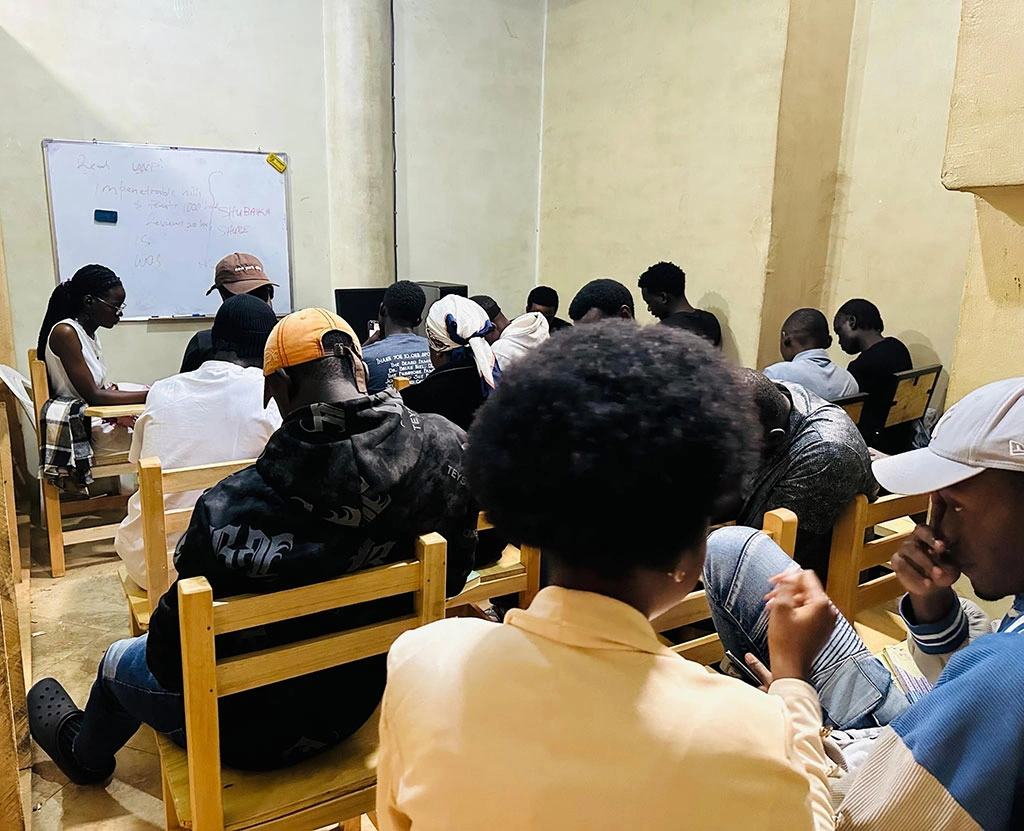
Best English Language Schools in Uganda
Posted on